modal verbs
he modal verbs are:
| can | could |
| may | might |
| shall | should |
| will | would |
| must |
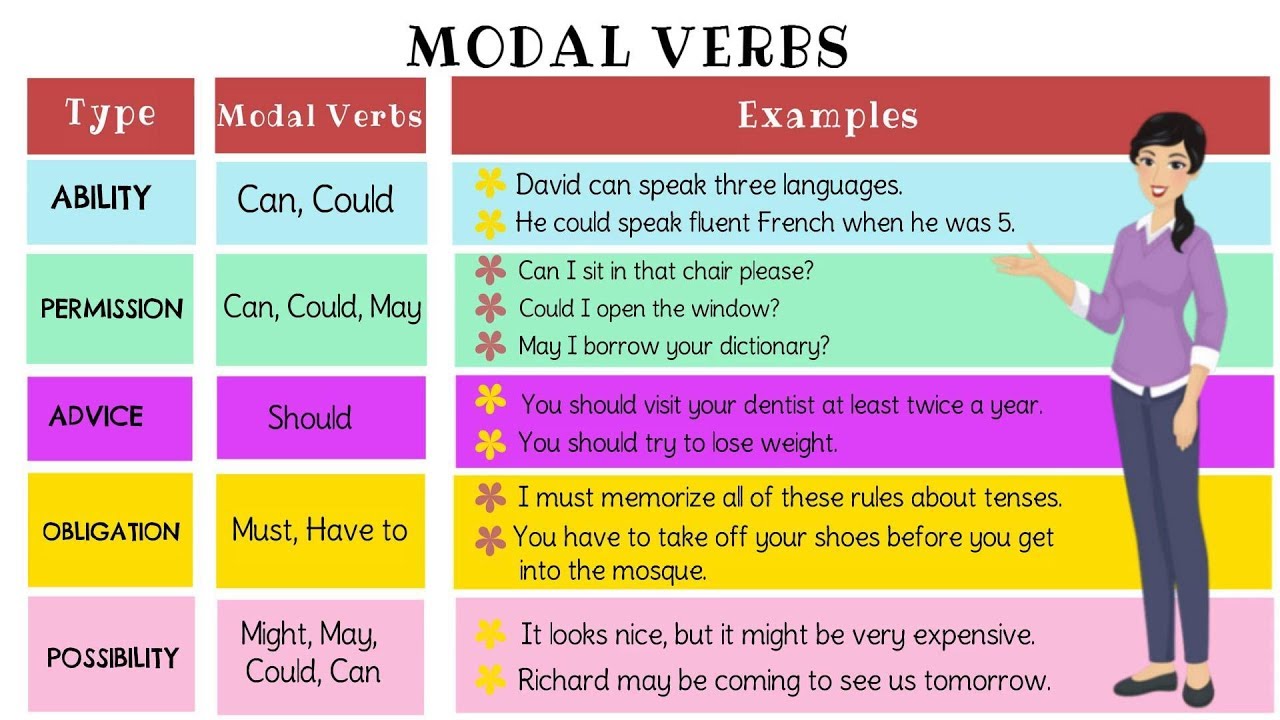
We use modal verbs to show if we believe something is certain, probable or possible (or not). We also use modals to do things like talking about ability, asking permission making requests and offers, and so on.

Here's a list of the modal verbs in English:
| can | could | may | might | will |
| would | must | shall | should | ought to |
Modals are different from normal verbs:
1: They don't use an 's' for the third person singular.
2: They make questions by inversion ('she can go' becomes 'can she go?').
3: They are followed directly by the infinitive of another verb (without 'to').
2: They make questions by inversion ('she can go' becomes 'can she go?').
3: They are followed directly by the infinitive of another verb (without 'to').
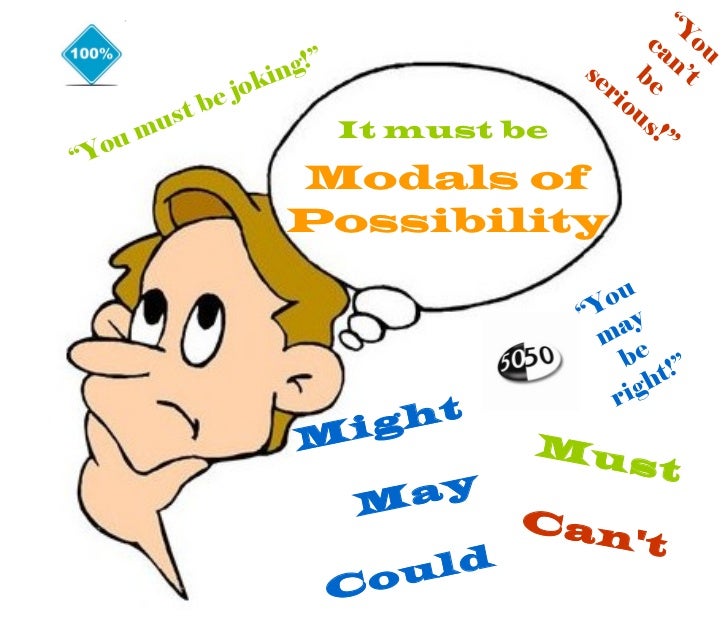
Probability:
First, they can be used when we want to say how sure we are that something happened / is happening / will happen. We often call these 'modals of deduction' or 'speculation' or 'certainty' or 'probability'.
For example:
For example:
- It's snowing, so it must be very cold outside.
- I don't know where John is. He could have missed the train.
- This bill can't be right. £200 for two cups of coffee!
Ability
We use 'can' and 'could' to talk about a skill or ability.
For example:
For example:
- She can speak six languages.
- My grandfather could play golf very well.
- I can't drive.
Obligation and Advice
We can use verbs such as 'must' or 'should' to say when something is necessary or unnecessary, or to give advice.
For example:
For example:
- Children must do their homework.
- We have to wear a uniform at work.
- You should stop smoking.
Permission
We can use verbs such as 'can', 'could' and 'may' to ask for and give permission. We also use modal verbs to say something is not allowed.
For example:
For example:
- Could I leave early today, please?
- You may not use the car tonight.
- Can we swim in the lake?
Habits
We can use 'will' and 'would' to talk about habits or things we usually do, or did in the past.
For example:
For example:
- When I lived in Italy, we would often eat in the restaurant next to my flat.
 Los verbos modales son verbos auxiliares que no pueden funcionar como un verbo principal, a diferencia de los verbos auxiliares "be", "do" y "have" que sí pueden funcionar como un verbo principal.
can, could, may, might, will, shall, should, ought to, must, would.
- "Can" indica habilidad o posibilidad. En estos casos puede ser traducido como "poder" en español.
Ejemplo: I can speak five languages. (Puedo hablar cinco idiomas.)
- "Could" es el pasado de "can"; indica posibilidad o habilidad en el pasado.

Ejemplo: It could have been worse. (Podría haber sido peor.); I couldn't sleep last night. (No pude dormir anoche.)
También se puede usar "could" para posibilidades en el futuro.
Ejemplo: You could pass the test if you studied. (Podrías pasar el examen si estudiaras.)
- Como "could", se usa "may" para indicar posibilidades en el futuro.
Ejemplo: It may be better to finish this now, rather than wait until tomorrow. (Tal vez sea mejor terminar esto ahora, en lugar de esperar hasta mañana.)
En frases interrogativas, el uso de "may" es más educado que "can" o "could".
Ejemplo: May I have a glass of water? (¿Podría tomar un vaso de agua?)
- Se usa "might" para indicar posibilidades en el presente o el futuro. En estos casos, es un sinónimo de "may".
Ejemplo: I would bring an umbrella, it might rain later. (Yo llevaría un paraguas, puede llover más tarde.)
- Se utiliza "will" para formar el tiempo futuro. También el uso de "will" significa voluntad o determinación.
Ejemplo: I will help you. (Te ayudaré.)
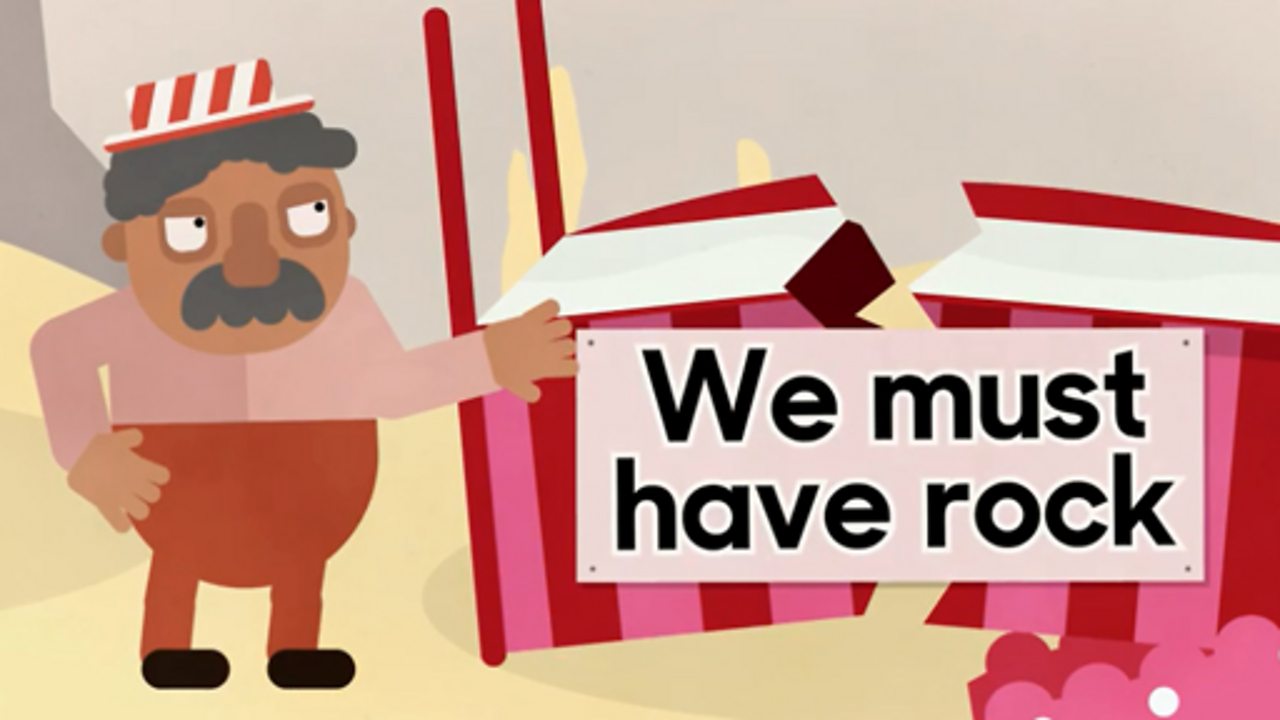
- Se usa "shall" como "will" para formar el tiempo futuro. El uso de "shall" es mucho más común en el Reino Unido y en general es más educado.
Ejemplo: Chris shall be happy to see you. (Chris estará feliz de verte.)
Nota: Las formas cortas de "will" y "shall" son lo mismo. Entonces "I'll" puede significar "I will" o "I shall".
- "Should" indica una obligación o recomendación. Refleja una opinión sobre lo que es correcto. Se traduce como el condicional de "deber" en español.
Ejemplo:You shouldn't work so hard. (No debería trabajar tan duro.)
- "Ought to" es un sinónimo de "should".
Ejemplo: They ought to work less. (Deberían trabajar menos.)
- "Must" indica una obligación, prohibición o necesidad. También puede emplearse "have to" (tener que).
Ejemplo: We must [have to] leave now or we will be late. (Tenemos que irnos ahora o llegaremos tarde.)
Es posible también usar "must" para preguntas retóricas.
Ejemplo:Must you always be late? (¿Siempre tienes que llegar tarde?)
- Se usa "would" para declarar una preferencia y para preguntar por algo educadamente.
Ejemplo: I would like a beer and my wife would like a glass of wine please. (Me gustaría una cerveza y a mi mujer le gustaría una copa de vino por favor.)
Structure with Modal Verbs
A Modal verb is followed by another verb in the base form (the infinitive without the 'To') and they are not conjugated (we don't add an 'S' in third person). See the following structure:
Subject + Modal Verb + Verb (base form of the infinitive)
- I can speak English (NOT: I can
tospeak English) - He can speak Spanish (NOT: He can speak
sSpanish) - She can speak Spanish (NOT: She can
sspeak Spanish)

Modal Verbs in Negative Sentences
Subject + Modal Verb + not + Verb (base form of the infinitive)
- You must not walk on the grass. (= You mustn't walk on the grass.)
- He cannot speak Arabic. (= He can't speak Arabic.)
- We should not be late. (= We shouldn't be late.)
As you can see in the examples above, contractions of the Modal verb + not are normally possible.
The negative of can is cannot ('not' is joined to 'can') and the contraction is can't
Modal Verbs in Questions
Modal Verb + Subject + Verb (base form of the infinitive)
- May I help you?
- Can I have another piece of cake please?
- Would you like to come with us?
Uses of Modal Verbs
Below we have a list of Modal verbs and the different uses of each with examples.


No hay comentarios:
Publicar un comentario