lunes, 25 de febrero de 2019

Too / Enough
Too equivale al español "demasiado".
Se utiliza siempre delante de los adjetivos o adverbios que modifica.
This exercise is too easy.Este ejercicio es demasiado fácil.


He arrived too late.
El llegó demasiado tarde.
Luego del adjetivo, puede agregarse "to" más un verbo.
He's too young to drive.
Es demasiado joven para conducir.

He's too weak to lift that ball.Es demasiado débil para levantar esa bola.
Si se usa con sustantivos, significa "demasiado/a/os/as" y va siempre seguido de many much, dependiendo del tipo de sustantivo contable o incontable.

There are too many people.
Hay demasiada gente.

There is too much shadow.Hay demasiada sombra.
Enough equivale al español "lo sufucientemente".
Se utiliza siempre después de los adjetivos o adverbios que modifica.

I arrived early enough.
Llegué lo suficientemente temprano.
También puede ser seguido de "to" más un verbo.
He isn't old enough to drive.No es lo suficientemente viejo como para manejar.

He isn't strong enough to lift it.No es lo suficientemente fuerte como para levantarlo.
Si se usa con sustantivos, significa "suficiente/s" y va siempre antes.

There aren't enough chairs for everyone.
No hay suficientes sillas para todos.

There isn't enough light.No hay suficiente luz.

Enough

Enough significa suficiente. Se usa con adjetivos adverbios o nombres:
  • Detrás de adjetivos:
    You are old enough to go to school on your own.  - Eres lo suficiente mayor para ir al colegio solo.
    I think she is strong enough to get over this. - Creo que ella es lo suficiente fuerte como para superar esto.
  • Detrás de adverbios:
    I am not well enough today. I'm still feeling bad. - No estoy suficientemente bien hoy. Aún me siento mal.
  • Delante de nombres:
    I don't have enough space in my house. - No tengo espacio suficiente en casa.
    Is there enough cold water in the fridge? - Hay suficiente agua fría en la nevera?
  • Solo. Cuando se sobreentiende el objeto a cuantificar:
    I don't want to eat more. I've had enough. - No quiero comer más. He tenido suficiente.
  • Enough of.
    I have heard enough of your poems to know you have a great talent. - He escuchado suficientes de tus poemas, como para saber que tienes un gran talento.

Too

Cuando hablamos de too hablamos de una palabra de la clase de los adverbios. Significa demasiado. 
  • Con adjetivos o adverbios:
    You are too old to know this – Eres demasiado mayor como para saber esto.
    I don't like to wake up too early. - No me gusta levantarme demasiado temprano.
  • Too many/too much:
    Too many se usa con sustantivos contables y too much con incontables. 
    I don't want to eat too much meat. - No quiero comer demasiada carne.
    I like too many Spanish writers – Me gustan demasiados escritores españoles.

Ejercicios con too and enough

Escoge la palabra o palabras más adecuadas que faltan en el hueco de cada frase.
1.- Maria is clever ____ enough to take this decision. 
a) too much b) too many c) too d) enough
2.- I am ____ old to understand this music. 
a) too much b) too many c) too d) enough
3.- I don't think it's ____ early to wake up. 
a) too much b) too many c) too d) enough
4.- There are ______ cats in these streets. 
a) too much b) too many c) too d) enough
5.- I don't like this meal. There is _____ salt in it.
a) too much b) too many c) too d) enough
6.- It's ____ far to go there by foot, let's take the train.
a) too b) enough
7.- This apartment is big ____ for me and my dog. 
a) too b)  enough

EXAMPLE;


lunes, 18 de febrero de 2019


Comparative and superlative adverbs


Comparatives and superlatives are types of adjectives and adverbs that are used to compare two or more things or people.

Click Here for Step-by-Step Rules, Stories and Exercises to Practice All Tenses


Comparative means to compare one thing to another.

Comparative adjectives and adverbs compare two things or people.

cheerleader           cheerleader jumping


Comparative Adjectives:Jan is taller than Sally.
Sally's blue uniform is more colorful than Jan's pink uniform.

Comparative Adverbs: Sally jumps higher than Jan.
Jan is cheering more quietly than Sally.


Superlative means to the highest degree or the most.

Superlative adjectives and adverbs compare three or more things or people.


group of people


Superlative Adverbs: 
Mrs. Smith talks most quietly.
Bob and Sam laugh loudest at Mary's joke.


In this lesson, you will learn how to form and use comparative and superlative adjectives and adverbs.


Here are some more "ly" adverbs that would use "more" and "most":

animals
  • easily
  • boldly
  • bravely
  • fearlessly
  • kindly
  • lightly
  • openly
  • politely
  • properly
  • rudely
  • safely
  • softly
  • silently
  • tenderly
  • weakly
The bird sings more tenderly than the penguin.
The lion roars most boldly of all the animals.


Of course there are exceptions to the rules. Here are just a few of the most common adverb exceptions.

WordComparative formSuperlative form
badlyworseworst
littlelessleast
muchmoremost
wellbetterbest
farfartherfarthest
farfurtherfurthest

Farther vs Further: What is the Difference?

teddy bear
sick bearteddy bear with flowers

The first bear feels better than the second bear.
The third bear feels the best of all three bears!
The bear in the middle feels the worst.


These were the rules of forming Comparatives and Superlatives. Now that you know them, it is time to practice! Get our ESL Books!


Did you know that you can visit Really Learn English on Pinterest? Click here: Really Learn English on Pinterest. You can also use this graphic to pin this page to your favorite board!

Pinterest Graphic


the rules.)


Here are just a few of the most common adjective exceptions.

WordComparative formSuperlative form
goodbetterbest
badworseworst
farfartherfarthest
farfurtherfurthest
manymoremost
littlelessleast
oldeldereldest


Some two syllable adjectives can follow two rules. Both forms of these words are grammatically correct.

For example:
WordComparative formsSuperlative forms
friendlyfriendlier
more friendly
friendliest
most friendly
quietquieter
more quiet
quietest
most quiet
simplesimpler
more simple
simplest
most simple

animals
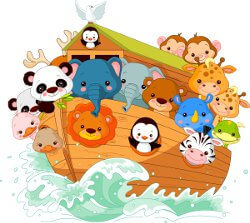
The elephants are the loudest animals on the boat.
The giraffes are taller than the penguins.
The most gentle animal is the dove.
The elephant is bigger than the monkey. 


Comparative and Superlative Adverbs

Some adverbs can have comparative and superlative forms.

They follow most of the same rules as adjectives.

Word FormExamplesComparative RuleExamplesSuperlative RuleExamples
One syllableadverbslate

soon

hard

fast
Add "r" or "er"later

sooner

harder

faster
Add "st" or "est"latest

soonest

hardest

fastest
Adverbs with two or more syllablesoften

seldom
Do not change the word

Add the word "more" before the adverb
more often

more seldom
Do not change the word

Add the word "most" before the adverb
most often

most seldom

Get Vocabulary, Grammar and Teaching Tips, Site Updates and Special Offers Directly to Your Mailbox


Con los adverbios terminados en -ly, se utiliza more para formar el comparativo y most para formar el superlativo.
AdverbioComparativoSuperlativo
quietlymore quietlymost quietly
slowlymore slowlymost slowly
seriouslymore seriouslymost seriously
EJEMPLOS
  • The teacher spoke more slowly to help us to understand.
  • Could you sing more quietly please?
En el caso de adverbios cortos que no terminan en -ly, las formas comparativas y superlativas son idénticas a los adjetivos: se añade -er para formar el comparativo y -est para formar el superlativo. Si el adverbio termina en e, se elimina esta última vocal antes de añadir la terminación.
AdverbioComparativoSuperlativo
hardharderhardest
fastfasterfastest
latelaterlatest
EJEMPLOS
  • Jim works harder than his brother.
  • Everyone in the race ran fast, but John ran the fastest of all.
Ciertos adverbios tienen formas irregulares en el comparativo y superlativo.
AdverbioComparativoSuperlativo
badlyworseworst
farfarther/furtherfarthest/furthest
littlelessleast
wellbetterbest
ejemplos:

Ejemplo:


Have to for obligation and need to for necessity

Modals of obligation

Los modales de obligación must y have toindican obligatoriedad, prohibición o necesidad. En español equivaldrían al verbo deber o tener que.

must go to buy eggs.
Debo ir a comprar huevos.

You'll have to wait. There's a client in the office.
Tendrá que esperar. Hay un cliente en la oficina.

2. ¿Cómo se utiliza must?

  • Must solo tiene forma en presente.


  • Must se utiliza para expresar que algo es esencial u obligatorio desde el punto de vista del hablante. Se trata de una obligación interior, subjetiva, que el propio hablante se impone.

    We must go home now. It's late.
    Tenemos que irnos. Es tarde.

    must give my mom a call.
    Debo llamar a mi madre.
  • Must también expresa una obligación fuerte que viene de una ley o normativa que si no lo respetamos conllevará una sanción o un castigo.

    You must wear your seat belt.
    Tienes que llevar puesto el cinturón.

    You must turn off all electronic devices.
    Deben apagar todos los dispositivos electrónicos.
  • En la forma negativa mustn't se utiliza para expresar prohibición.

    You mustn't touch the jellyfish.
    No debes tocar la medusa.

    You mustn't tell lies.
    No debes contar mentiras.

3. ¿Cómo se utiliza have to?


  • A diferencia del verbo modal must, que solo admite obligación en presente, have toadmite obligación en todos los tiempos verbales.
  • Have to se utiliza para expresar obligaciónen oraciones afirmativas. En oraciones negativas expresa ausencia de obligación.

    I'll have to wear a tie in my new job.
    Tendré que llevar corbata en mi nuevo trabajo.

    You don't have to take the jacket.
    No hace falta que cojas la chaqueta.
  • 4. Diferencias entre have to y must

    • En forma afirmativa en presente, tanto mustcomo have to son intercambiables en muchos casos. Sin embargo, se prefiere el uso de have to cuando la obligación es exterior, objetiva. En cambio, utilizamos must cuando la obligación de realizar la acción viene por parte del hablante.

      have to pick up my brother from school.
      Tengo que recoger a mi hermano en la escuela.
      Como podemos observar, el hermano mayor tiene la obligación de recoger a su hermano menor en la escuela porque su madre se lo ha pedido, por lo tanto la oblicación viene por parte de la madre (externa).

      must finish the column today.
      Hoy tengo que terminar la columna.
      Como podemos observar, esta periodista tiene la obligación de terminar un artículo para que pueda ser publicado en una espacio corto de tiempo. Es una imposición personal.
    • En frases negativas, a diferencia de mustn'tque denota prohibiciónhave to sirve para expresar la ausencia de una obligación o la no necesidad de hacer algo. La traducción al español sería no hace falta que o no tienes que.

      You didn't have to bring anything.
      No tenías que traer nada.
      Esta oración es emitida por una persona que ha organizado una fiesta. Uno de los invitados ha traído una botella de vino y la anfitriona pronuncia esta oración para decir que no hacía falta. Aun así, por cortesía, la ha traído.

      We won't have to clean the car, it'll rain.
      No hará falta que limpiemos el coche, va a llover.
      Esta oración es emitida por una persona que está mirando el pronóstico del tiempo. Al no ser favorable, le comunica al chico que no es necesarioque limpien el coche ya que hay probabilidades de que llueva y vuelva a quedar sucio.
    • Example:


Gerund phrases as subject and object Both  would rather  and  would prefer  are used to express preferences in English. Here are some ex...