Comparative and superlative adverbs
Comparatives and superlatives are types of adjectives and adverbs that are used to compare two or more things or people.
Comparative means to compare one thing to another.
Comparative adjectives and adverbs compare two things or people.


Comparative Adjectives:Jan is taller than Sally.
Sally's blue uniform is more colorful than Jan's pink uniform.
Comparative Adverbs: Sally jumps higher than Jan.
Jan is cheering more quietly than Sally.
Sally's blue uniform is more colorful than Jan's pink uniform.
Comparative Adverbs: Sally jumps higher than Jan.
Jan is cheering more quietly than Sally.
Superlative means to the highest degree or the most.
Superlative adjectives and adverbs compare three or more things or people.

Superlative Adverbs:
Mrs. Smith talks most quietly.
Bob and Sam laugh loudest at Mary's joke.
In this lesson, you will learn how to form and use comparative and superlative adjectives and adverbs.
Here are some more "ly" adverbs that would use "more" and "most":
- easily
- boldly
- bravely
- fearlessly
- kindly
- lightly
- openly
- politely
- properly
- rudely
- safely
- softly
- silently
- tenderly
- weakly
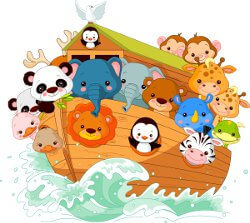
The bird sings more tenderly than the penguin.
The lion roars most boldly of all the animals.
The lion roars most boldly of all the animals.
Of course there are exceptions to the rules. Here are just a few of the most common adverb exceptions.
| Word | Comparative form | Superlative form |
| badly | worse | worst |
| little | less | least |
| much | more | most |
| well | better | best |
| far | farther | farthest |
| far | further | furthest |
Farther vs Further: What is the Difference?

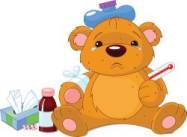

The first bear feels better than the second bear.
The third bear feels the best of all three bears!
The bear in the middle feels the worst.
The third bear feels the best of all three bears!
The bear in the middle feels the worst.
These were the rules of forming Comparatives and Superlatives. Now that you know them, it is time to practice! Get our ESL Books!
Did you know that you can visit Really Learn English on Pinterest? Click here: Really Learn English on Pinterest. You can also use this graphic to pin this page to your favorite board!

Here are just a few of the most common adjective exceptions.
| Word | Comparative form | Superlative form |
| good | better | best |
| bad | worse | worst |
| far | farther | farthest |
| far | further | furthest |
| many | more | most |
| little | less | least |
| old | elder | eldest |
Some two syllable adjectives can follow two rules. Both forms of these words are grammatically correct.
For example:
| Word | Comparative forms | Superlative forms |
| friendly | friendlier more friendly | friendliest most friendly |
| quiet | quieter more quiet | quietest most quiet |
| simple | simpler more simple | simplest most simple |
The elephants are the loudest animals on the boat.
The giraffes are taller than the penguins.
The most gentle animal is the dove.
The elephant is bigger than the monkey.
The giraffes are taller than the penguins.
The most gentle animal is the dove.
The elephant is bigger than the monkey.
Comparative and Superlative Adverbs
Some adverbs can have comparative and superlative forms.They follow most of the same rules as adjectives.
| Word Form | Examples | Comparative Rule | Examples | Superlative Rule | Examples |
| One syllableadverbs | late soon hard fast | Add "r" or "er" | later sooner harder faster | Add "st" or "est" | latest soonest hardest fastest |
| Adverbs with two or more syllables | often seldom | Do not change the word Add the word "more" before the adverb | more often more seldom | Do not change the word Add the word "most" before the adverb | most often most seldom |
| Pñ |
Con los adverbios terminados en -ly, se utiliza more para formar el comparativo y most para formar el superlativo.
| Adverbio | Comparativo | Superlativo |
|---|---|---|
| quietly | more quietly | most quietly |
| slowly | more slowly | most slowly |
| seriously | more seriously | most seriously |
EJEMPLOS
- The teacher spoke more slowly to help us to understand.
- Could you sing more quietly please?
En el caso de adverbios cortos que no terminan en -ly, las formas comparativas y superlativas son idénticas a los adjetivos: se añade -er para formar el comparativo y -est para formar el superlativo. Si el adverbio termina en e, se elimina esta última vocal antes de añadir la terminación.
| Adverbio | Comparativo | Superlativo |
|---|---|---|
| hard | harder | hardest |
| fast | faster | fastest |
| late | later | latest |
EJEMPLOS
- Jim works harder than his brother.
- Everyone in the race ran fast, but John ran the fastest of all.
Ciertos adverbios tienen formas irregulares en el comparativo y superlativo.
| Adverbio | Comparativo | Superlativo |
|---|---|---|
| badly | worse | worst |
| far | farther/further | farthest/furthest |
| little | less | least |
| well | better | best |
ejemplos:

Ejemplo:


No hay comentarios:
Publicar un comentario